Canadian Neuromorphic Engineering Workshop
Where neuroscience meets engineering, biology inspires computation, and diverse minds
converge to unlock the secrets of intelligent systems.
Organisers
In alphabetical order



Welcome to the Canadian Neuromorphic Engineering Workshop
"The brain is imagination, and that was exciting to me; I wanted to build a chip that could imagine something" — Misha Mahowald
About the Workshop
Join us for an exciting convergence of minds! This workshop brings together researchers, engineers, neuroscientists, computational scientists, roboticists, and enthusiasts from diverse backgrounds to share insights, collaborate, and push the boundaries of neuromorphic computing.
Diversity drives discovery
What to Expect
Engage with discussions, hands-on daily hackathons, collaborative group projects, insightful panel discussions, and unwind in the evenings with board games and social activities.
Dates & Venue
June 15–26, 2026
University of Waterloo, Waterloo, Ontario, Canada
Registration Fees (including HST)
Academic
$1017 CAD (~€628)
Students, postdocs, and academic researchers
Industry
$1695 CAD (~€1047)
Industry professionals and corporate participants
Convert to your currency:
Exchange rates updated daily
The registration fee includes workshop attendance for the full 12-day duration (June 15–26), daily lunch, daily coffee breaks, final banquet, and access to all workshop facilities and events. Accommodation is NOT provided in the registration fee.
Application
Application Deadline: April 20, 2026
You will receive a decision and registration details within one to two weeks of your application being received. Please get in touch if you have not heard back in this time frame.
Invited Discussion Leaders Deadline: March 9, 2026
Application Form
Complete the application form to register for CNEW 2026
Upon decision, you will receive a letter of invitation as soon as possible for VISA application purposes.
Apply Now →Accommodation
We have arranged convenient on-campus housing options at the University of Waterloo for workshop participants. Two accommodation styles are available to suit different preferences and budgets. While we recommend these options for their proximity and convenience, you're welcome to explore alternative accommodations in the Waterloo area.
Ron Eydt Village (REV)
Style: Traditional residence
Room Type: Shared double room
Approx. Cost: ~980.84 CAD (~€607) for 14 nights for 1 person (490.42 per person if shared) — $62/night + 13% HST
Features:
- Shared lockable bedroom with one roommate
- Two twin beds, desks, and closets per room
- Shared gender-specific washrooms on each floor
- 24/7 front desk
- Community centre with fitness room, pool tables, and study spaces
- On-site dining at REVelation
- Laundry facilities
- High-speed wireless internet
Mackenzie King Village (MKV)
Style: Suite-style residence
Room Type: Private room in 4-bedroom suite
Approx. Cost: ~2404.64 CAD (~€1489) for 14 nights (~601.16 CAD per person in a group of 4) — $152/night + 13% HST. You need to be a group of 4 — contact us and we can arrange groups.
Features:
- Private lockable bedroom
- Shared suite with 3 other participants
- Two single-occupancy lockable washrooms per suite
- Shared kitchen with full-sized fridge and stove
- Shared living room area
- Air conditioning (only suite-style with A/C)
- Community centre with game room
- Laundry facilities
- High-speed wireless internet
Note: All utilities (heat, electricity, water, internet) are included. Accommodation preferences can be indicated during registration.
Discussion Leaders & Topics
World-wide experts bringing interactive discussions and hands-on tutorials.
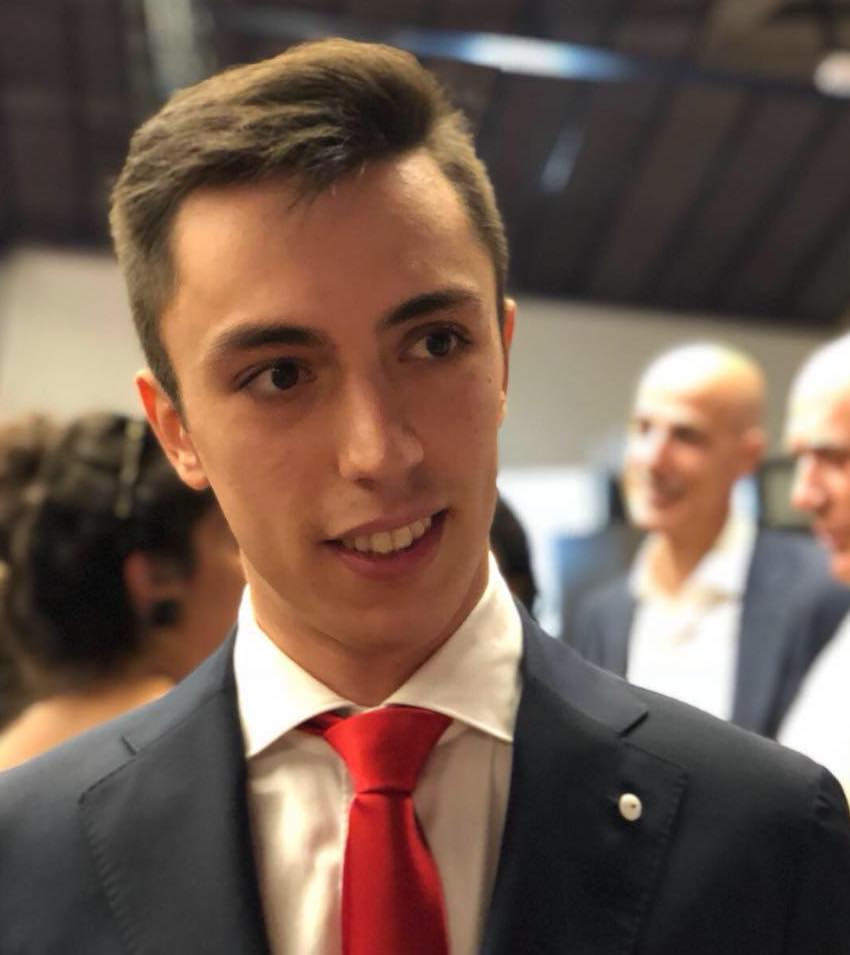
Luca Peres
University of Manchester
Large-Scale SNNs on Neuromorphic Hardware
Real-time simulation of biologically-representative spiking neural networks at scale, and the practical challenges of mapping them onto neuromorphic hardware.
Event-Driven Sensing for Edge Vision
Event-based sensor fusion for computer vision at the edge — covering in-sensor and near-sensor computing paradigms for low-power deployments.
Tutorial: Beyond von Neumann
Hands-on exploration of neuromorphic architectures designed to overcome the memory-bandwidth bottleneck.
Project Ideas
Real-time event-based sensor fusion pipeline · Benchmark SNNs across neuromorphic platforms · In-sensor processing to beat the von Neumann bottleneck

Ján Antolík
Charles University, Prague
Visual Processing & Sensory Coding
How visual information is transformed across the stages of the visual hierarchy to form everyday perception — bridging large-scale spiking network models, rate-based models, and machine learning.
Neuroprosthetic Vision Restoration
Applying computational neuroscience to design stimulation protocols for future sensory prosthetic systems, from biological modelling to practical implant design.
Tutorial: Quantified Self & Teaching with Neurons
An hands-on session exploring self-tracking data through a neuroscience lens, and pedagogical approaches for teaching computational concepts with spiking models.
Project Ideas
Model a stage of the visual hierarchy and benchmark it against neural recordings · Design a closed-loop stimulation protocol for a simplified prosthetic vision system · Apply sensory coding principles to compress or denoise real-world visual data

Elena Petri
Eindhoven University of Technology
“Neuromorphic control through the eyes of hybrid systems”
An introduction to neuromorphic approaches to control engineering. We discuss how theoretical tools from hybrid dynamical systems and event-triggered control and estimation can be used to model, analyze and design spiking controllers with guarantees.
Spiking Controllers for Different Control Problems
How spiking control architectures can address classical control objectives such as stabilization, regulation, and rhythmic control — and the advantages they may offer compared to classical techniques. Case studies include neuromorphic control for nuclear fusion plasma fueling using ice pellets.
Tutorial: From Event-Based Control to Spiking Control Systems
A hands-on session bridging classical control questions and tools with neuromorphic design — covering how to model and analyze closed-loop systems with spikes by exploiting their hybrid and event-based nature.
Project Ideas
Design and analyze a neuromorphic controller for different control objectives · Compare spiking vs. classical controllers · Investigate open questions in spiking-based control
Jamie Knight
University of Sussex
Insect Navigation & Vision
Key differences from mammalian vision, efficient navigation strategies, and their relevance to low-power neuromorphic computation.
Intro to Neuromorphic Engineering
A broad overview of the landscape — analogue vs. digital approaches and example systems.
Tutorial: GeNN / mlGeNN
GPU-accelerated spiking neural network simulation with GeNN and its machine learning companion mlGeNN.
Project Ideas
Deploy insect-inspired navigation models on robots · Extend biological models with new behavioural tasks · Implement insect vision circuits on neuromorphic hardware
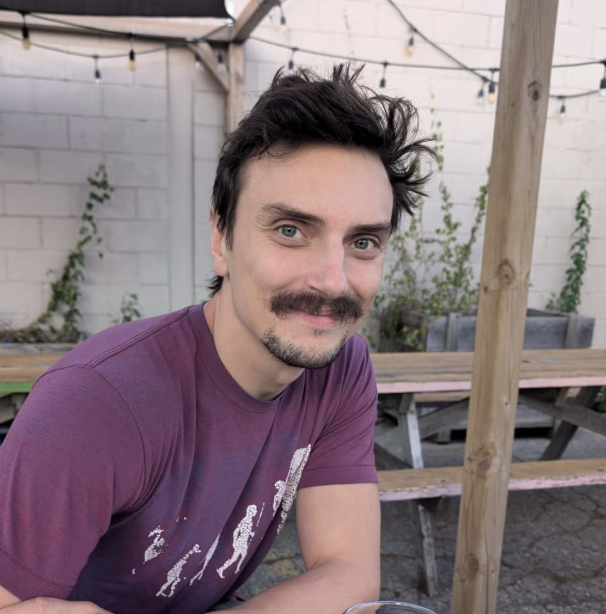
Nolan Shaw
Mount Royal University
What does it really mean to “compute”?
The observation that functional programming (born of the lambda calculus) and imperative programming (born of the Turing machine) are equivalent is foundational to computer science. Yet, there’s a substantial imbalance in the visibility of these two paradigms. Imperative programming is essentially the de facto model of computation in the world today. Through it, we emphasise state and data; computation is a game of manipulating symbols, and the properties of those symbols are important above all else. Meanwhile, functional programming eschews what’s “inside” the symbols. Primitive types are fairly close to vacuous, and there’s little distinction between data and functions between data. From this lens, a different emphasis emerges. I argue that the (real) spirit of computation—composition and abstraction—is more easily seen from this lens, where suggested best practices in imperative approaches become core pillars. This switch in thinking is made rigorous by category theory, and suggests a broader, philosophical shift from noun-based ways of thinking to verb-based ones.
Terry Stewart
National Research Council of Canada · University of Waterloo
How the Brain Works — and How to Build It
A three-part arc: how the brain computes, how to engineer systems that follow the same principles, and how to put those systems to practical use.
Tutorial: Introduction to Nengo
Hands-on introduction to Nengo for building and simulating large-scale brain-inspired models across multiple hardware backends.
Tutorial: Efficient Representations of Time and Space
How spiking networks encode temporal and spatial information efficiently, with practical exercises building such representations from scratch.
Project Ideas
Cross-hardware benchmarking: GPUs, SpiNNaker, Braindrop · Activation steering for LLM behaviour · Neuromorphic control of a Lego pinball table · Implementing Beat Saber in neurons
Giulia D'Angelo
Czech Technical University in Prague
Mammalian Vision & Event-Based Perception
How the mammalian visual system processes the world — from retinal encoding to cortical representations — and how these principles translate into neuromorphic vision systems using dynamic vision sensors.
Attention & Microsaccades in Neuromorphic Systems
Biologically-inspired active vision: how microsaccadic eye movements drive efficient scene exploration, and how to implement event-based attention mechanisms on neuromorphic hardware.
Tutorial: DVS Cameras & SpiNNaker
Hands-on session working with dynamic vision sensors and the SpiNNaker platform — from raw event streams to real-time spiking network deployment for computer vision tasks.
Project Ideas
Real-time sign language recognition with DVS cameras and SNNs · Event-based object detection pipeline on SpiNNaker · Bio-inspired active vision system with microsaccadic control
Michael Furlong
National Research Council of Canada · University of Waterloo
Probabilistic Neuromorphic Programming
A new paradigm for programming neuromorphic systems probabilistically — bridging cognitive architectures, generative models, and Vector Symbolic Algebras for principled uncertainty handling in spiking networks.
Automous Exploration
From planetary robotics to animal exploration: how biologically-inspired representations enable efficient active exploration — drawing on work at NASA Ames and the NRC.
Tutorial: Vector Symbolic Architectures
Hands-on introduction to VSAs as a framework for structured, compositional representations in spiking neural networks — covering binding, bundling, and probabilistic inference in high-dimensional spaces.
Project Ideas
Apply VSA-based exploration strategies to a simulated robot navigation task · Build a neuromorphic Markov Chain Monte Carlo sampler · Implementing spiking neural models of probabilistic inference
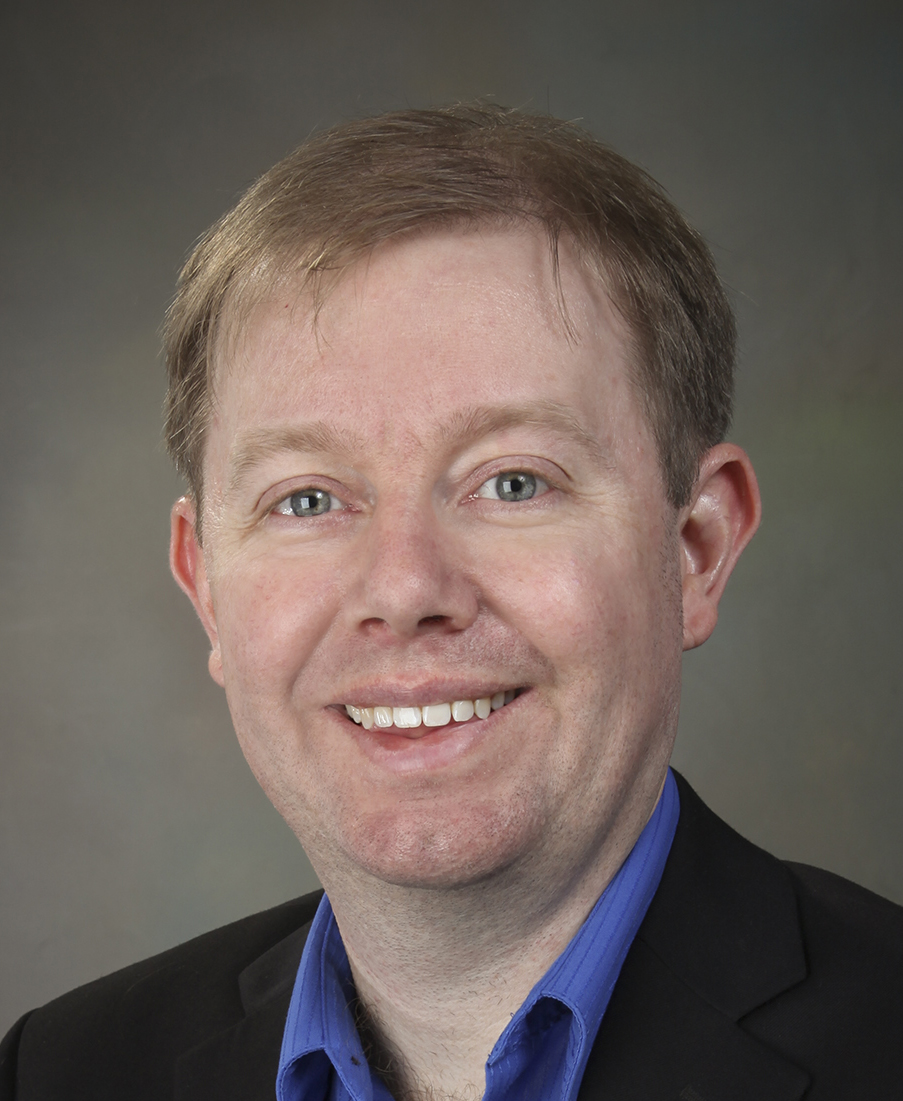
Brad Aimone
Sandia National Laboratories
Neuromorphic algorithms for scientific computing
Due to increasing power costs, neuromorphic computing is starting to be explored for large-scale scientific computing applications. We will discuss how classic compute algorithms, such as random walk simulations and graph analytics can be accelerated on neuromorphic hardware.
A theoretical framework for neuromorphic computing
We will discuss how neuromorphic algorithms scale compared to their conventional counterparts and what this means in terms of algorithms suitability for neuromorphic implementation.
Tutorial: NeuroFEM
Hands-on introduction to directly solving Finite Element Method (FEM) problems using spiking neural networks.

Ernst Niebur
Johns Hopkins University
Visual Selective Attention & New Developments
How the brain selects and prioritises relevant visual information from a complex scene — covering the computational principles of selective attention in primates and recent developments in the field, including figure-ground organisation, border-ownership coding, and motion-driven saliency.
Tutorial: The Mihalas–Niebur Neuron Model
A hands-on introduction to the generalised integrate-and-fire Mihalas–Niebur neuron model — covering its biological motivations, its rich repertoire of spiking behaviours, and how to implement it in practice for large-scale network simulation.
Project Ideas
Build a biologically-inspired pipeline from DVS event streams to scene understanding. Starting from raw events, participants will construct spatiotemporal receptive fields analogous to V1 simple and complex cells, extract edges and contours, and work towards figure-ground segmentation — motivated not by biology as a gold standard, but by the functional reasons that make this architecture necessary. The goal is to get started during the workshop and continue towards a publication afterwards.

Jennifer Hasler
Georgia Institute of Technology
Analog Neuromorphic Computing & Field Programmable Analog Arrays
How floating-gate MOS transistors and large-scale FPAAs enable reconfigurable analog hardware that physically implements neural computation — and why analog is thousands of times more energy-efficient than digital for neuromorphic workloads.
Computing in Memory & Low-Power Neural Systems
The principles of in-memory computing, subthreshold transistor models of biological neurons and synapses, and how mixed-signal IC design bridges the gap between neuroscience and real hardware deployment.
Tutorial: FPAAs for Neuromorphic Engineering
Hands-on introduction to Field Programmable Analog Arrays — from synthesis tools to on-chip learning — showing how to map spiking neural network computations directly onto reconfigurable analog substrates.
Project Ideas
Implement a spiking neuron circuit on an FPAA and benchmark its energy use against a digital equivalent · Design an analog synapse array for on-chip learning · Explore floating-gate devices as a substrate for adaptive neuromorphic memory
Srikanth Ramaswamy
Newcastle University
Neuromodulation & Neocortical Network Dynamics
How neuromodulatory systems shape the activity of cortical networks — drawing on experimental neurophysiology and large-scale data-driven simulations developed at the Blue Brain Project, EPFL.
Data-Driven In Silico Brain Reconstruction
The principles behind reconstructing brain regions computationally: how experimental data constrains model building, and what large-scale simulations reveal about emergent network behaviour.
Tutorial: Large-Scale Biologically Detailed Network Modelling
Hands-on introduction to building and running biophysically detailed spiking network models, informed by Blue Brain Project tools and methodology.
Project Ideas
Simulate a neocortical microcircuit and probe the effect of neuromodulatory inputs · Compare neuromodulated vs. baseline network dynamics · Build a reduced model capturing key features of a detailed Blue Brain reconstruction
More discussion leaders will be announced soon.
Confirmed speakers and their full bios will be updated as invitations are accepted.
Calendar
Getting Here
The workshop is held at the University of Waterloo, roughly 100 km west of Toronto Pearson International Airport (YYZ). There are three main options to get here, ordered from fastest to cheapest. No car is needed.
GO Train — if timing works out
The most comfortable option when it aligns with your arrival. The GO Train runs from Toronto Union Station to Kitchener GO Station. Note that the GO Train does not stop at the airport — you'll need to take the UP Express or a shuttle to Union Station first.
GO Transit schedules →FlixBus + ION Light Rail — recommended
Take the FlixBus directly from Toronto Pearson Airport to Downtown Kitchener (Victoria/Weber stop — roughly 1–1.5 hrs). From there, board the ION light rail northbound to the University of Waterloo terminus, then walk or take a local bus to campus.
GO Bus (direct) — slower but cheaper, no transfer
The GO Bus 25 runs from Toronto Pearson directly to the Ring Road / UW Davis Centre stop on campus — no transfers needed. It takes longer than the FlixBus+ION combination but is the most straightforward option.
Key Locations
Your starting point
Victoria/Weber St — transfer to ION here
GO Train terminus from Toronto Union
GO Bus 25 drops here — on campus
Questions about getting here? Email us at canadian.ne.workshop@gmail.com
Code of Conduct
Building a workshop where everyone feels safe, respected, and free to do their best work.
CNEW brings together people from many countries, cultures, career stages, and disciplines for twelve days of close collaboration: lectures, hackathons, shared meals, late-night discussions, and everything in between. That kind of intensity only works if everyone feels safe, respected, and free to contribute. This document sets out what we expect from each other, and what will happen if those expectations aren't met.
By attending this workshop, whether as a participant, discussion leader, organizer, or sponsor, you must agree to this Code of Conduct. It applies everywhere the workshop happens: lecture halls, hackathon spaces, social events, shared accommodation, and any online or hybrid components. It also extends to how we talk about each other and the workshop on social media.
Treat people with respect:
Disagreement and debate are part of doing science, that's encouraged. But personal attacks, intimidation, bullying, or deliberately disrupting someone else's talk or work are not. Comments that demean someone based on their gender, gender identity or expression, age, sexual orientation, disability, body size, ethnicity, religion (or lack of one), nationality, or political views have no place here.
Treat everyone as equals:
CNEW brings together people at very different career stages, from undergraduates to senior researchers, but no one's seniority, title, or experience entitles them to less respect, or grants them more. The same standards of courtesy, attention, and consideration apply regardless of who someone is or where they sit in the academic hierarchy. Respect is not something to be earned by rank; it's the baseline for everyone.
Respect personal boundaries:
Unwelcome physical contact, persistent unwanted attention, stalking or following someone, harassing photography or recording, and sexual harassment of any kind will not be tolerated, in person or online.
Be honest in your science:
CNEW depends on trust in the work people present. Fabricating or falsifying data, or presenting others' work as your own, undermines that trust and will be treated as a serious violation of this Code. Be careful to always remember your collaborators, and shared ideas.
Look after shared spaces:
Fighting, theft, property damage, or generally disruptive behaviour that interferes with the workshop for others is not acceptable. A defence of "I was just joking" doesn't change whether behaviour was harassing, impact matters more than intent.
If something goes wrong:
If you're comfortable doing so, sometimes the simplest fix is to let the person know their behaviour crossed a line, many issues come from someone having a bad day or not realizing the effect they're having, and a quiet word resolves it. If you'd rather not, or the situation is more serious, contact the organizers directly, in person or if you feel safer at our official email address: canadian.ne.workshop@gmail.com. You can do this at any time, during the workshop or afterwards, and we will treat it with discretion. If your concern involves one of the organizers, or they feel they have a conflict of interest, they'll step back and direct you to someone else on the team who can help.
What happens next:
Depending on what's appropriate, organizers may respond with actions ranging from an informal conversation, to a formal warning, to removal from the workshop without refund, to barring someone from future CNEW events, to informing their institution or funder, or, where warranted, involving local authorities. If action is taken against someone, they'll have the opportunity to appeal.
Prefer not to share your name?
We know that reaching out can feel difficult, especially if you'd rather not identify yourself. You can submit a report anonymously using the form below, we'll still read and act on it, even without knowing who sent it.
Submit an Anonymous Report →